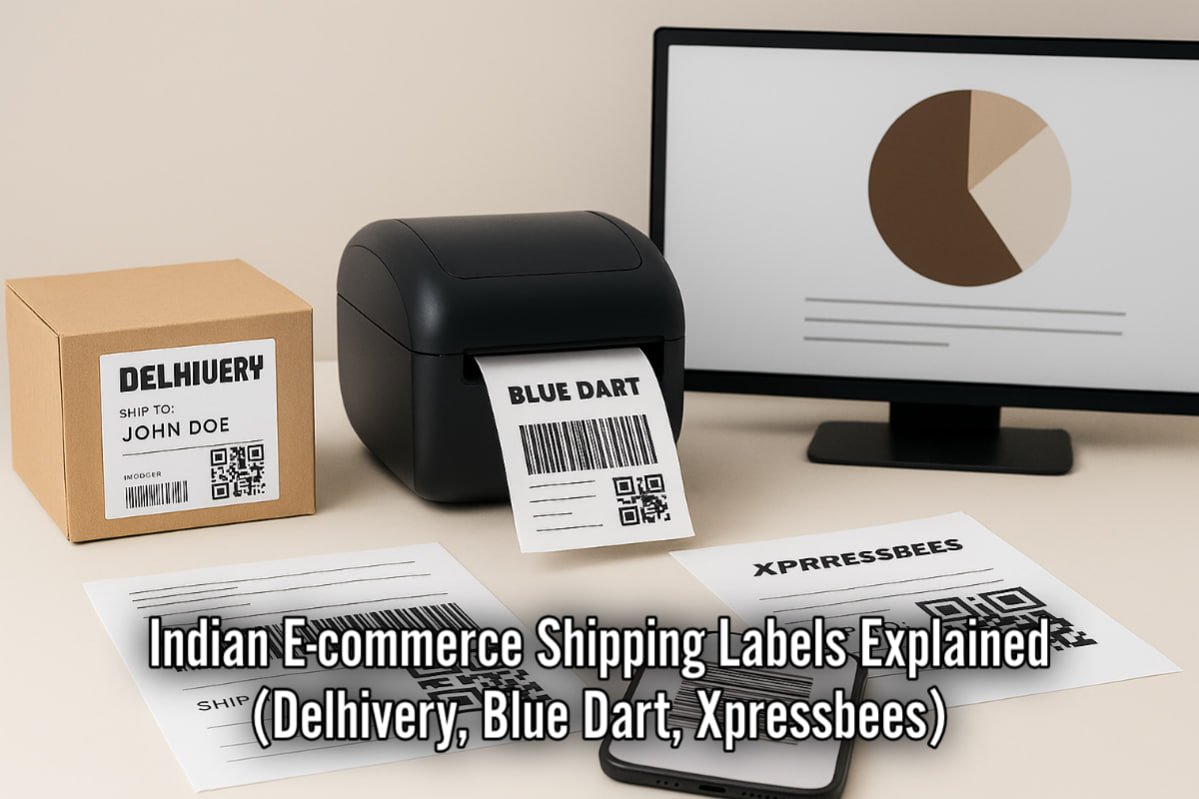
Navigating the Nuances of Indian E-commerce Logistics
For online sellers in India, the shipping label is the single most important document that stands between a packed product and a happy customer. While the basic concept is universal, you'll find the Indian logistics landscape has its own unique set of requirements and complexities that differ significantly from its Western counterparts. Understanding the specific formats and data elements used by major players like Delhivery, Blue Dart, Xpressbees, and India Post isn't just a matter of best practice—it's essential for ensuring fast, accurate, and cost-effective deliveries across the country's diverse and challenging geography.
The Universal Anatomy of an Indian Shipping Label
Despite variations between courier companies, you’ll notice all compliant shipping labels in India share a core structure designed for a logistics network that handles everything from dense urban metropolises to remote rural villages. Here are the key components:
- Sender and Recipient Information:
This includes the standard name and address details. However, in the Indian context, this section often requires more detail. A complete, multi-line address including landmarks ('Near City Hospital'), apartment block numbers, and sub-locality names is crucial for successful final-mile delivery. The phone number is not just important; it's mandatory, as delivery agents frequently call recipients to confirm their location.
- The Pincode (The Most Critical Element):
The 6-digit Postal Index Number (PIN) is the single most important piece of data on an Indian shipping label. The entire logistics network, from initial sorting to final delivery office allocation, is architected around the pincode. An incorrect pincode is the number one cause of routing errors and significant delays.
- The AWB (Air Waybill) Number and Barcode:
This is the equivalent of a tracking number. Each package is assigned a unique AWB number, which is represented as both a human-readable string and a scannable barcode (usually Code 128). This is the key that enables real-time tracking across the courier’s network.
- Service Type and Payment Method:
The label must clearly indicate the service level (e.g., 'Surface', 'Air') and, critically, the payment method. For Cash on Delivery (COD) shipments, the label must have a highly prominent, often brightly colored, section that clearly states 'COD' and the exact amount to be collected by the delivery agent. This is a non-negotiable feature for the vast majority of Indian e-commerce transactions.
- Sorting and Routing Codes:
You will see large, bold codes on the label that correspond to the destination city, sorting hub, and the specific final-mile delivery center. For example, 'DEL' for Delhi, 'BOM' for Mumbai, followed by a code for a specific local branch. These are designed for rapid sorting by both machines and human operators.
- Package Weight and Order Details:
The declared weight of the package is used for billing, while the Order ID and a brief product description help with internal referencing and customer service inquiries.
A Closer Look at Major Indian Couriers
1. Delhivery
As a tech-first logistics giant, you'll find Delhivery’s labels are optimized for automation. They feature multiple barcodes, including a primary AWB barcode and often a secondary one for internal routing. The destination hub and final delivery center codes are typically large and very prominent, designed to be read quickly by automated sorting systems. They also have a very clear, sectioned-off area for COD information.
2. Blue Dart
As one of India's most established premium couriers (and part of the DHL network), Blue Dart labels are known for their clarity and detailed information. They prominently feature both the AWB number and an Order Number. Interestingly, Blue Dart often uses color-coding on its physical stickers (waybills) to differentiate between service levels like 'Domestic Priority' or 'Apex', and this is reflected in the clear service level indicators on their printed labels.
3. Xpressbees
Xpressbees, another major e-commerce logistics player, uses a label format that is highly functional and data-rich. Like others, it emphasizes the AWB barcode and has clear demarcations for routing codes. You’ll notice their labels are particularly clear about payment type, with large, bold lettering for 'PREPAID' or 'CASH ON DELIVERY' to minimize errors by the delivery agent.
4. India Post (Speed Post)
As the government-operated postal service, India Post's labels, especially for Speed Post, have become increasingly modernized to compete with private players. They feature a unique tracking number format (e.g., starting with 'EM' for EMS Speed Post), a barcode for scanning, and detailed address fields. While traditionally more focused on manual sorting, they have invested heavily in automated systems, making the scannable barcode and accurate pincode more critical than ever.
The Non-Negotiable Need for a Digital Label Generator
Given the complexity and carrier-specific nuances, handwriting labels or using a simple Word template is not a viable strategy for any serious Indian e-commerce seller. You must use a software solution that can generate compliant labels in bulk.
- E-commerce Marketplace Dashboards:
Platforms like Amazon Seller Central (for Easy Ship) and the Flipkart Seller Hub have built-in label generation tools that produce compliant labels for their partnered couriers.
- Dedicated Shipping Aggregators:
Services like Shiprocket or Pickrr integrate with multiple courier companies. They allow you to compare rates and generate the correct, compliant label for your chosen courier, all from a single platform.
- Free Online Label Generators:
For sellers who manage their own logistics or need a simple, fast tool for generating standardized labels, a platform like SmartLabelPrint.com is invaluable. It provides templates for the Indian market, ensuring all necessary fields like Pincode, phone number, and payment mode are included, and arranges them in a professional, universally understood format.
Printing for the Indian Market: A4 vs. Thermal
Interestingly, the choice of printer can dramatically impact your operational efficiency. While many small sellers start with A4 sticker sheets, the clear path to scaling is with a thermal printer.
- A4 Sticker Sheets:
This is an accessible starting point. You can print multiple labels on a single sheet using a standard office printer. However, it's crucial to use a label generator with a reliable preview to avoid misprints and wasted sheets. Always set your printer scale to '100%' or 'Actual Size' to ensure barcode scannability.
- 4x6 Thermal Printer:
This is the professional standard. A thermal printer prints individual, peel-and-stick labels at high speed without ever needing ink or toner. This method is faster, cheaper per label, and produces durable, smudge-proof labels that can withstand the rigors of transit. A smart label crop tool can even help you convert A4 labels from marketplaces into a 4x6 thermal format.
By understanding the specific anatomy of Indian shipping labels and leveraging the right digital tools, you can ensure your packages are always compliant, professional, and ready for a fast, accurate journey to your customer's doorstep. This mastery of logistics is a key differentiator in the competitive Indian e-commerce landscape.